DMG MORI Spindle Repair – ISO40 Taper

DMG MORI spindle repair – ISO40

  • Spindle manufacturer: DMG MORI / inlineMASTER / KESSLER

  • Machine: DMG MORI

  • Spindle speed: 18 000 rpm

  • Taper: ISO40

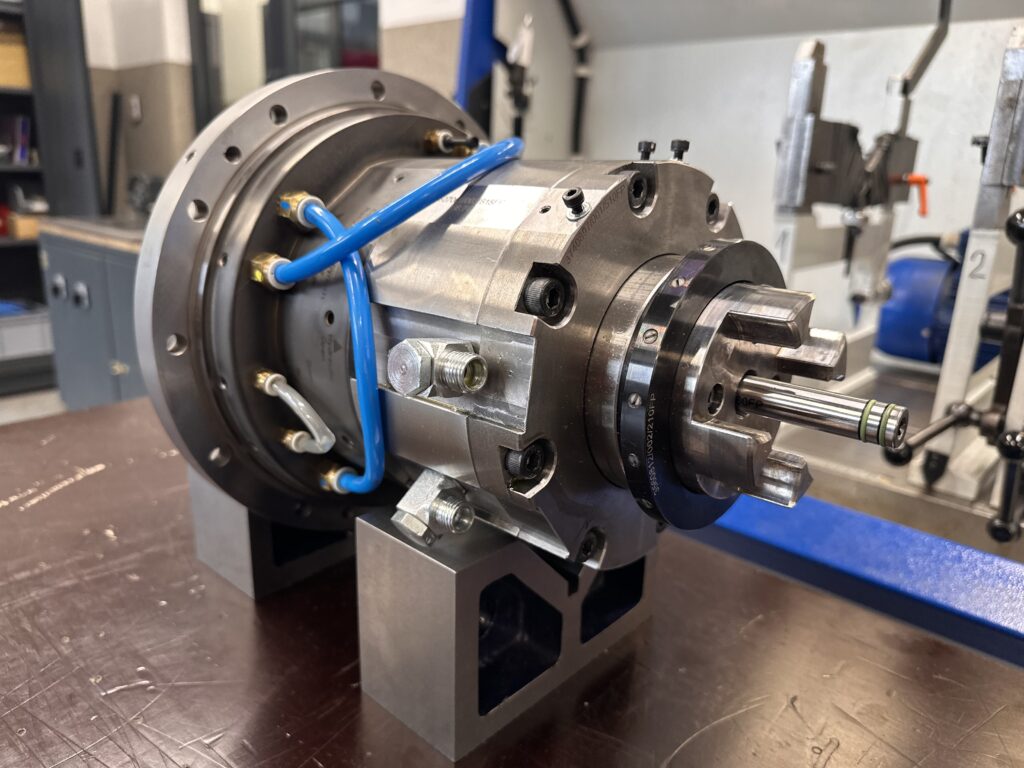
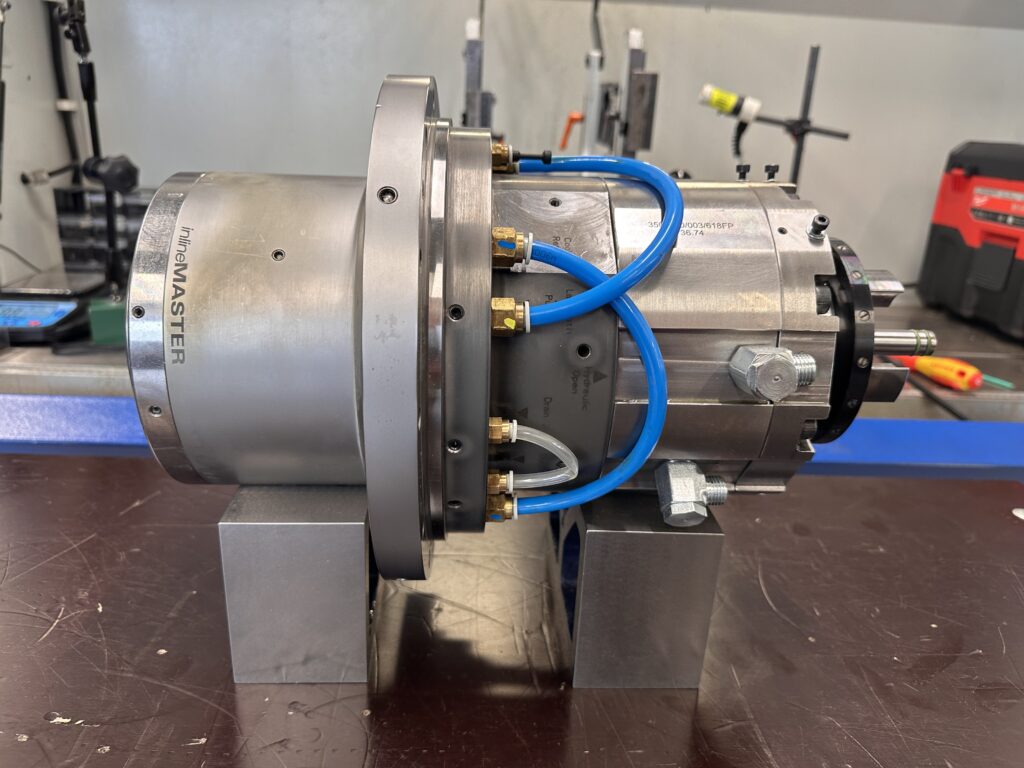
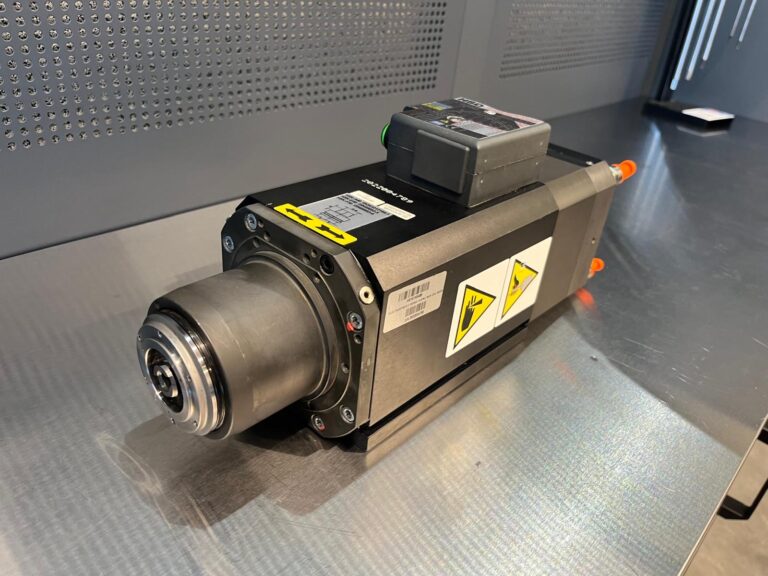
A spindle from a machining center DMG MORI arrived at our service. It is a KESSLER inlineMASTER unit with an ISO40 taper and a maximum speed of 18 000 rpm. The customer reported increasing noise at higher speeds, noticeable vibration during milling and occasional problems with tool retention. After a short interview about the machine’s operation, we proceeded to full diagnostics.

DMG MORI spindle repair – ISO40

Diagnostics
and condition check

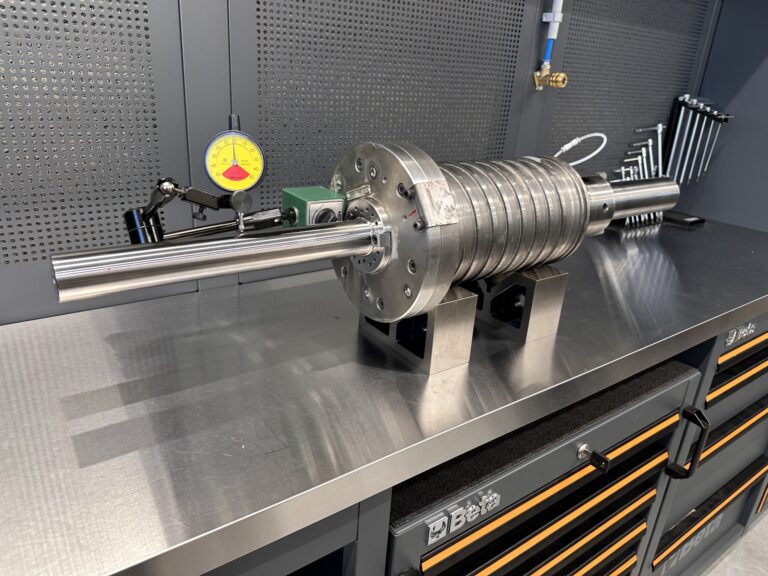
At the beginning we checked the condition of the ISO40 taper and the contact surface. There were visible wear marks and scratches, which usually appear after working with dirty toolholders or after an accidental bump during a tool change. Runout measurement confirmed it exceeded values acceptable for precise machining. Additional vibration and noise measurements indicated worn bearings, and the tool clamping force test showed unstable values. That was enough to decide on: bearing replacement, taper repair, balancing, drawbar service and sensor calibration.

Scope of work
DMG MORI spindle repair
1. Disassembly, cleaning and inspection
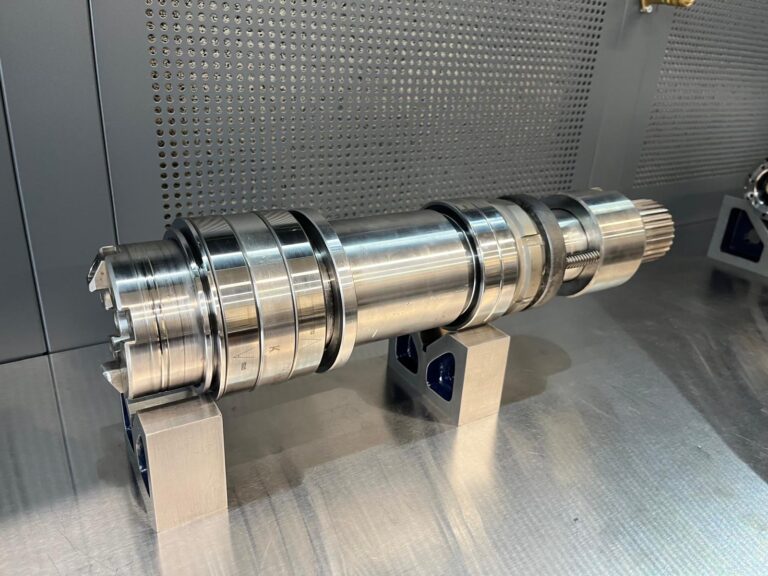
We disassembled the spindle, cleaned it thoroughly and catalogued each part. We checked bearing seats, lubrication channels and seals. We installed a set of new spindle-grade bearings and, during assembly, set the proper preload and fits. Correct bearing setup directly affects working temperature, vibration level and service life of the whole assembly — especially at 18 000 rpm.
ISO40 taper restoration proceeded in several steps. First measurement and marking of areas for correction, then gentle equalising grinding, and finally finishing and lapping. The goal was to restore even contact between the taper and the toolholders so the tool sits firm and on axis. We also checked the face surface and the taper position relative to the spindle axis. After completion, runout dropped to values within our strict tolerances.
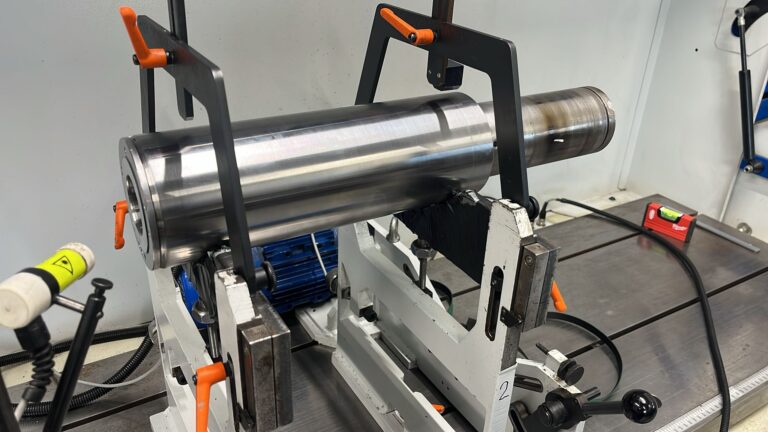
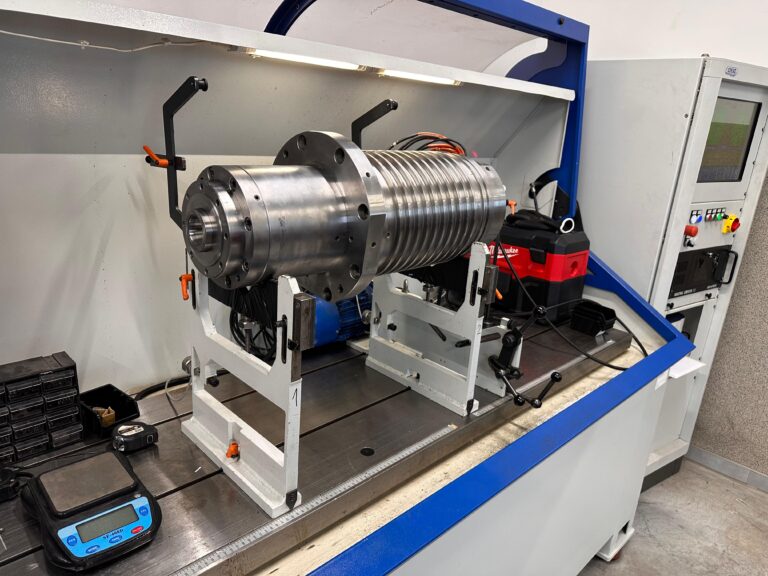
The next step was precise balancing. After bearing replacement and taper machining, the mass distribution inside the spindle always changes, so we performed dynamic balancing to class 0.4G. We work step by step: measurement, correction, re-measurement until stable results across the whole speed range. The effect is immediate — lower vibration, quieter operation and lower loads on the bearings.
4. ISO40 drawbar repair and calibration
We also serviced the drawbar mechanism. We replaced wear items (disc springs, gripper segments, guides, seals), checked drawbar length and stroke and the condition of seats. After assembly we measured clamping force with a certified instrument for ISO40 tapers to make sure the tool is held repeatably and with the right force. A stable clamp translates to safety, precision and less risk of loosening during heavy cutting.
5. Sensor calibration
Finally, we set up the sensors. We calibrated drawbar position sensors (open/closed), checked speed signals and — where possible — temperature monitoring. The idea is that the machine control receives clear and accurate information: it won’t allow rotation with the clamp open, won’t raise false alarms and will run tool-change cycles smoothly.
6. Final tests and documentation
We carried out final tests according to our standard procedure. We warmed up the spindle gradually, observing temperature, sound and vibration. We checked taper runout after warm-up, performed a series of clamp/unclamp cycles and recorded the clamping force. We attached the balancing protocol, runout report and clamping force report. The customer also received short maintenance tips: clean tapers and holders regularly, check pull studs, use proper warm-up and pay attention to unusual sounds at high speed.
DMG MORI spindle service – ISO40 DMG MORI spindle repair – ISO40

Results after repair
DMG MORI spindle

After the entire process, the DMG MORI/KESSLER inlineMASTER spindle with ISO40 taper runs smoothly and quietly across the full speed range. Vibration dropped significantly, clamping force is stable, and surface finish improved already in the first customer trials. This means longer tool life, fewer downtimes and better process repeatability.

When to consider
a full service

If your DMG MORI shows similar symptoms — noise, vibration, marks on the ISO40 taper or a drop in clamping force — don’t postpone it. Bearing replacement, taper repair, balancing, drawbar repair and sensor calibration in one consistent process deliver the best results and visibly reduce production costs. We’ll be happy to handle the service from A to Z.
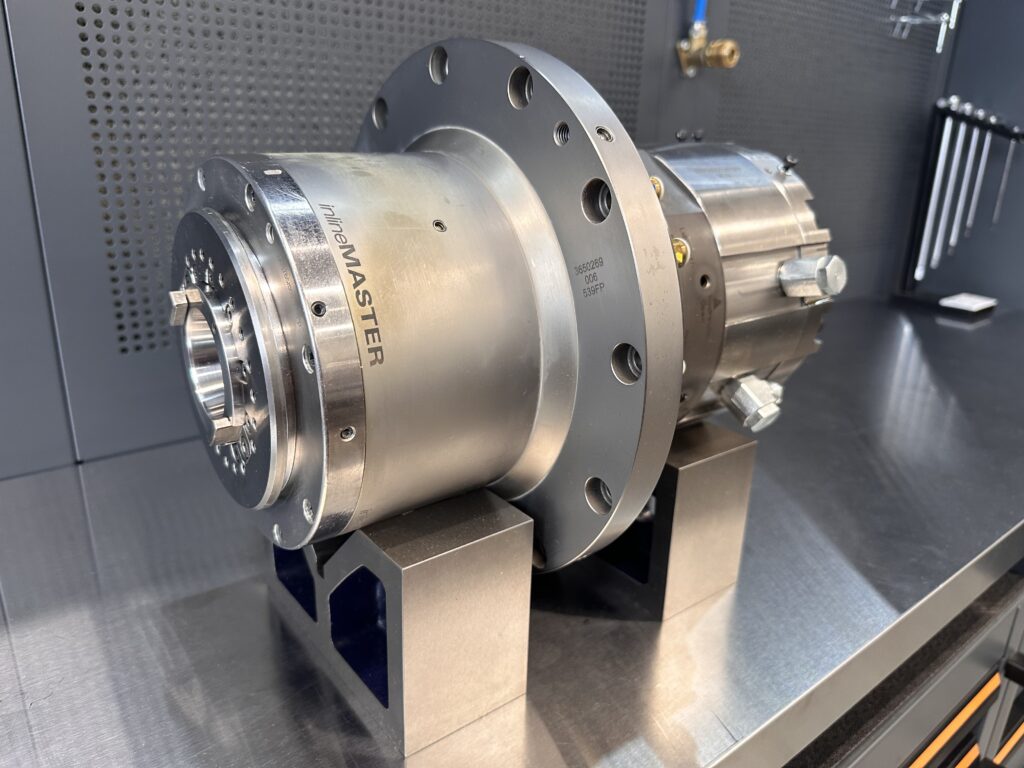
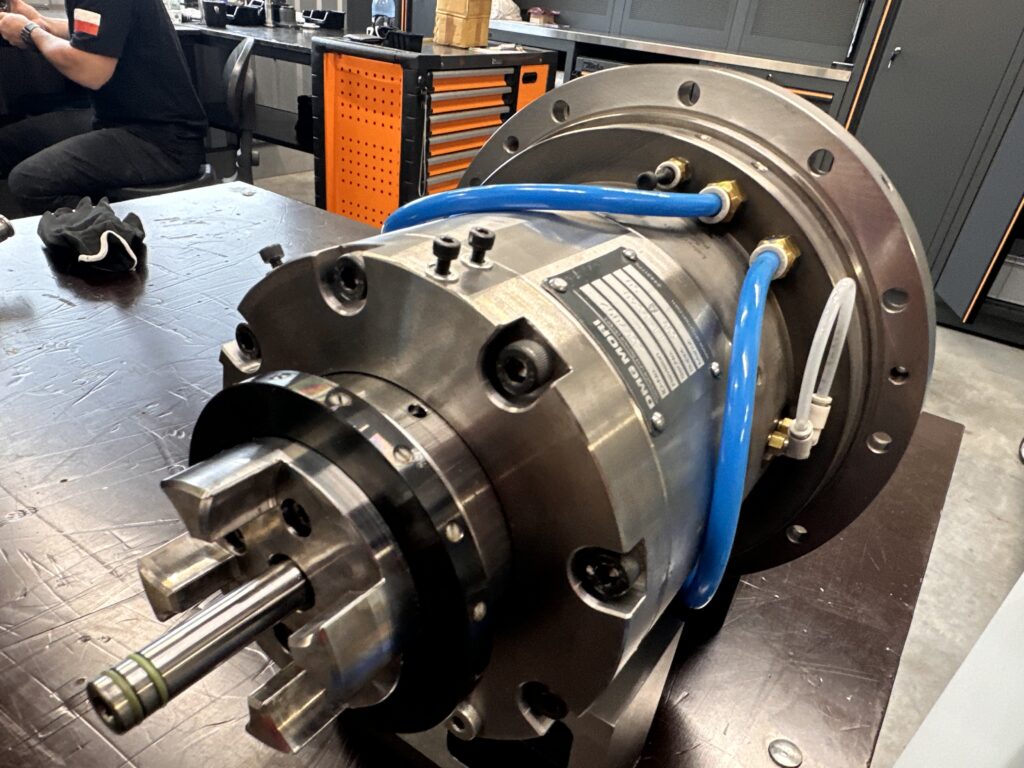
ISO40 taper restoration – DMG MORIDynamic balancing of DMG MORI spindle – 0.4G accuracy class

Similar symptoms?
Contact us

Do you need a comprehensive DMG MORI spindle service with ISO40 — from removal, through taper restoration, precise balancing, to drawbar repair and calibration? Write or call.
Similar Posts